Color PPF Technologies

@Scafusa

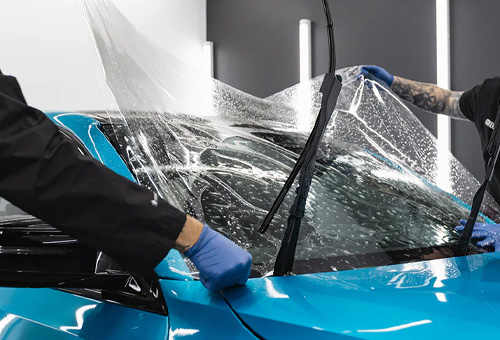
Color PPF Installation Process

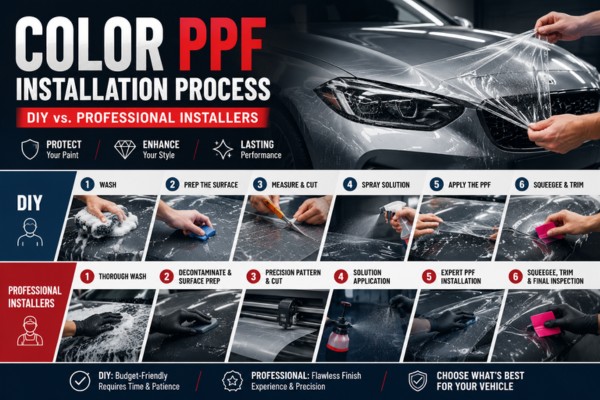
Color PPF Installation Process | DIY vs. Professional Installers

Whether you are protecting a brand-new vehicle or refreshing the look of an older one, color PPF (short for colored paint protection film) is one of the most exciting developments in automotive finishing. It combines the durability of traditional clear paint protection film with the aesthetic flexibility of a full wrap, giving your vehicle a bold new look while shielding the factory paint underneath. But getting the results right depends almost entirely on how well you execute the color PPF installation process. This guide covers everything you need to know, from understanding what color PPF is and why surface preparation matters more than any other step, to the tools you need, the actual application technique, and how to avoid the most common mistakes that ruin an otherwise flawless finish. Whether you are a weekend DIYer tackling your first hood or a professional installer looking to sharpen your workflow, this article walks you through the entire process with the depth and clarity the job demands. If you are looking for premium color PPF products and expert support, the team at SCAF USA is a trusted resource for both professional installers and serious enthusiasts.   What Is Color PPF and Why Is It Different from Standard Clear Film? Color PPF is a thermoplastic urethane film that comes pre-tinted or pigmented in a wide range of colors and finishes, from deep metallics and matte blacks to vibrant satin blues and color-shift iridescents. Unlike standard clear PPF, which is nearly invisible once applied, color PPF serves a dual purpose: it protects your vehicle’s original paint from stone chips, road debris, UV degradation, and minor abrasions, while simultaneously acting as a full-color change solution. The core material is the same high-grade urethane used in traditional protection film, which means it carries the same self-healing properties when exposed to heat. Small surface scratches in the film will literally disappear after a few minutes in sunlight or after a light pass from a heat gun. This is a feature that standard vinyl wraps simply cannot offer, and it is one of the main reasons car owners are choosing color PPF over vinyl wraps when long-term protection is the priority. The thickness of color PPF typically ranges between 6 and 8 mils, making it substantially thicker than decorative vinyl. That extra mass is what absorbs the impact energy from road debris before it ever reaches your factory paint. For car owners who want both color and protection without committing to a permanent respray, color PPF has become the premium choice. The trade-off is cost and installation complexity. Color PPF is significantly more expensive per square foot than either vinyl wrap or clear PPF, and because the film is opaque, any installation errors such as bubbles, silvering, stretched panels, or lifted edges are immediately visible. That is why understanding and correctly executing the color PPF installation process is non-negotiable if you want results that look like a factory finish.   Tools and Materials You Need Before Starting the Color PPF Installation Process Attempting to install color PPF without the right tools is one of the most reliable ways to ruin expensive film. The list below covers the essentials. Skimping on any of these will cost you more in wasted material than the tools themselves. Surface Preparation Tools You will need a clay bar kit or clay mitt, isopropyl alcohol (IPA) at 70 to 91 percent concentration, lint-free microfiber towels, a paint decontamination spray, and optionally a dual-action polisher with a light cutting compound if the paint has any surface swirls that could telegraph through the film. Installation Fluids The slip solution, sometimes called the install solution, is a diluted mixture typically made from baby shampoo and distilled water, or a dedicated PPF slip solution from manufacturers like GYEON, Flexfilm, or Avery Dennison. You will also need a tack solution (a much thinner mixture, sometimes nearly straight water) used when positioning edges and doing final placement. Sourcing professional-grade installation fluids through a supplier like SCAF USA ensures you are working with products specifically formulated for PPF adhesive chemistry. Application Tools A quality squeegee is indispensable. PPF installers almost universally prefer a felt-edge squeegee or a dedicated PPF squeegee, because hard plastic edges scratch or mark the film. You will also need a heat gun (not a hair dryer, since the temperature range is not sufficient), a sharp PPF knife or precision scalpel with fresh blades, cutting tape or low-tack masking tape for edge work, and a spray bottle for your slip solution. Positioning and Measurement Pre-cut patterns from a plotter make installation dramatically more accurate. Services like the DAP (Design Access Program) from Xpel, or pattern-cutting software for plotters like the Roland or Graphtec cutters, allow you to print exact templates for specific vehicle panels. If you are doing a custom cut by hand, a quality digital caliper and a soft tape measure help ensure panel symmetry. Safety and Environment Work in a clean, dust-free environment. A professional installation booth with filtered air is ideal, but if you are working in a garage, close all doors and windows, park on a clean floor, and avoid working when it is windy or dusty outside. Temperature matters greatly: the ideal installation temperature for color PPF is between 65 degrees F and 80 degrees F (18 to 27 degrees C). Film becomes too stiff to conform in cold conditions and too tacky and unforgiving in excessive heat.   Surface Preparation: The Step That Determines Everything If there is one truth in the color PPF installation process, it is this: the quality of your surface preparation determines the quality of your final result. No amount of technique during application will compensate for contaminated, scratched, or improperly degreased paint.   Washing and Decontamination Start with a thorough two-bucket hand wash using a pH-neutral car shampoo. Rinse completely, then dry the vehicle using a clean microfiber drying towel. After the initial wash, perform an iron decontamination by spraying the entire vehicle with an iron fallout

Color PPF Installation Process | DIY vs. Professional Installers Read More »
Matte Color PPF

Matte Color PPF Guide | Installation & Maintenance Tips

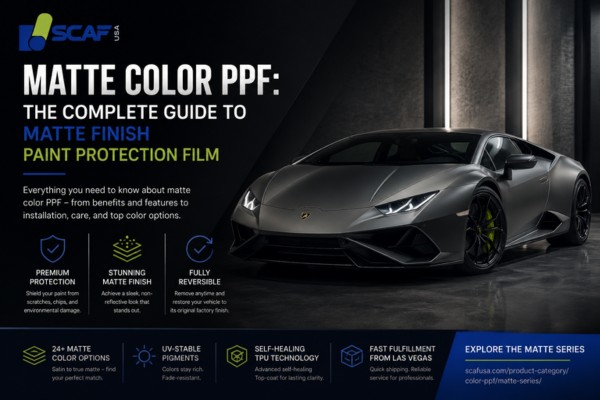
The automotive world has witnessed a quiet revolution over the last decade. Where high-gloss paint once ruled as the undisputed king of showroom floors, a new aesthetic has taken over garages, car shows, and Instagram feeds: the deep, light-absorbing elegance of matte color PPF. If you have ever seen a blacked-out luxury SUV or a silky-smooth sports car wearing a finish that seems to swallow light rather than reflect it, you have almost certainly been looking at matte color paint protection film in action. At SCAF USA, we specialize in premium color PPF technologies engineered for both everyday drivers and serious enthusiasts. Our Matte Series offers over 24 individual colorways ranging from Frozen Leaden Gray to Capri Gray Purple, each designed to deliver that signature non-reflective finish while providing the structural protection your paint deserves. In this comprehensive guide, we cover what matte color PPF actually is, how it differs from satin color PPF, why it outperforms traditional vinyl wraps, and everything you need to know before making your investment. What Is Matte Color PPF? Matte color PPF, short for matte color paint protection film, is a thermoplastic urethane (TPU) film that is pigmented throughout and engineered with a flat, low-gloss top layer. Unlike traditional clear PPF, which is transparent and designed only to protect the factory paint beneath it, this protective film serves a dual purpose: it changes the color and finish of your vehicle while simultaneously acting as a physical barrier against chips, scratches, UV radiation, and environmental contaminants. The “matte” designation refers to the light reflectance value of the film’s surface. A standard gloss film will typically measure above 80 GU (gloss units) at a 60-degree angle. A true matte film sits below 30 GU, creating that soft, diffused surface that absorbs rather than bounces ambient light. The result is a three-dimensional, almost tactile appearance that photographs beautifully and turns heads in real life. According to the Wikipedia overview of paint protection film, the material was originally developed for military use to protect helicopter rotor blades from high-speed particle damage. Automotive applications followed, and today’s color PPF products have evolved far beyond that original utilitarian purpose into genuine styling tools with industry-leading protection specs. What sets modern matte color PPF apart from earlier generations of the product is the inclusion of self-healing top coats. Many of today’s premium matte films contain elastomeric polymers in the clearcoat layer that allow light surface scratches to disappear when heat is applied, either from the sun or a heat gun, without compromising the matte appearance. This self-healing capability was once exclusive to gloss films, but now extends fully to the matte product category. Matte Color PPF vs. Satin Color PPF One of the most common points of confusion for car owners entering the world of color PPF is the distinction between matte and satin color PPF. While both finishes occupy the “non-gloss” spectrum and share many of the same protective properties, they produce noticeably different visual results and suit different aesthetic preferences. Satin color PPF sits in the middle of the gloss scale, generally in the 30–60 GU range, producing a smooth, semi-sheen surface that is sometimes described as “eggshell” or “silk.” It is shinier than true matte but nowhere near the mirror-like depth of a gloss film. Satin finishes tend to emphasize the body lines and curves of a vehicle in a particularly flattering way, creating a sense of sleekness that can make a car look factory-fresh and intentionally designed rather than wrapped. True matte finish PPF, by contrast, operates at the lower end of the reflectance scale and produces a heavier, more opaque appearance. Where satin looks refined and modern, pure matte reads as bold and aggressive. Matte black, for instance, is practically synonymous with stealth aesthetics; matte military green evokes rugged, off-road authority; matte frost white delivers a futuristic minimalism that standard gloss white cannot touch. From a maintenance perspective, matte and satin color PPF share similar care requirements. Both should be cleaned with pH-neutral products and should not be waxed with conventional carnauba or synthetic waxes, which can fill in the microscopic peaks and valleys of the surface that create the non-reflective effect. Both finishes are also incompatible with machine polishing unless the owner is specifically trying to transition the vehicle back to a glossier appearance. This care requirement is far less stringent than maintaining a matte factory paint job, however, because the PPF itself acts as the sacrificial layer, keeping your factory paint fully fully sealed and protected beneath it at all times. At SCAF USA, our full Color PPF collection includes both pure matte and satin-adjacent options so you can choose exactly the reflectance level that matches your vision. Why Choose Matte Color PPF Over Vinyl Wrap? The conversation about this protective film almost always circles back to the comparison with matte vinyl wrap, since both products can produce a visually similar result at first glance. But the differences in material composition, durability, and protection level are significant enough to justify the price premium that PPF commands. Vinyl wrap is made from PVC (polyvinyl chloride) film with a pigmented top layer and pressure-sensitive adhesive. It is designed primarily as a cosmetic product. Its core function is aesthetics, and while it does offer some minor protection against door dings and light abrasion, it cannot absorb the kind of road debris impact that a thicker TPU film can. Most vinyl wraps range from 2–4 mils in thickness. Premium color PPF products, including the SCAF USA Matte Series, are manufactured at 6–8 mils, a meaningful difference when a gravel chip at highway speed is the thing standing between the film and your factory paint. TPU, the material at the heart of all quality matte color PPF, is fundamentally more elastic and impact-absorbent than PVC. When a stone strikes a TPU film, the material deforms to absorb the energy and then returns toward its original shape rather than cracking or delaminating. This elastic memory, combined with the self-healing properties mentioned earlier, makes TPU-based color PPF a genuinely protective product

Matte Color PPF Guide | Installation & Maintenance Tips Read More »

Best Color PPF Brands

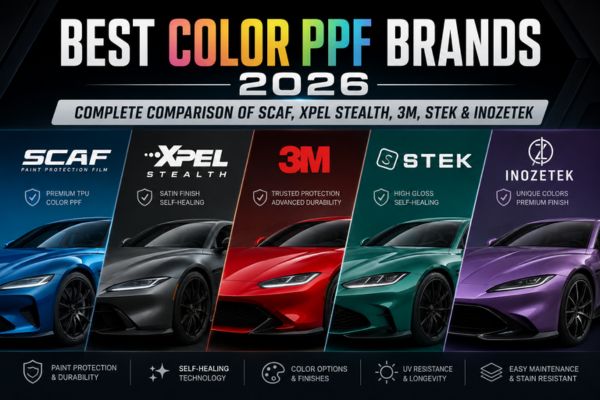
Best Color PPF Brands 2026 | SCAF vs XPEL, STEK, 3M and Inozetek

The best color PPF brands in 2026 are changing the automotive customization industry with advanced protection, luxury finishes, and long-term durability. The automotive restyling industry has experienced a massive transformation in recent years. Vehicle owners no longer want simple vinyl wraps or ordinary paint protection solutions. Modern drivers now expect premium appearance, advanced paint protection, long-term durability, and luxury-level customization in a single product. This growing demand has made color paint protection film one of the fastest-growing automotive aftermarket products worldwide. Color PPF has become especially popular among owners of luxury vehicles, exotic cars, sports cars, and premium SUVs because it offers a combination of style and protection that traditional wraps cannot match. Unlike ordinary vinyl films, TPU-based Color PPF provides real paint protection while simultaneously changing the appearance of the vehicle with high-gloss, satin, metallic, matte, or crystal-inspired finishes. As more brands enter the market, choosing the best color PPF brands has become increasingly difficult. Some companies focus on high-end finishes, while others prioritize self-healing technology, durability, installation quality, or color variety. Customers searching for the best Color PPF brand often compare names like XPEL, 3M, STEK, Inozetek, and emerging premium TPU brands like SCAF USA. This detailed comparison guide explores the strengths, weaknesses, technology, finish quality, durability, and performance of the leading Color PPF brands in 2026. Whether you own a luxury sedan, performance coupe, supercar, or daily driver, this guide will help you understand which Color PPF solution best fits your needs. Color Paint Protection Film is a specialized TPU or polyurethane-based film designed to protect automotive paint while simultaneously transforming the appearance of the vehicle. Traditional clear PPF focuses only on protection, while Color PPF combines protection with visual customization. Modern TPU Color PPF products include multiple protective layers engineered to resist scratches, road debris, UV exposure, oxidation, environmental contamination, and chemical stains. Many premium films also include self-healing topcoats that allow light scratches and swirl marks to disappear when exposed to heat. One of the major reasons for the rapid growth of Color PPF is that drivers no longer need to choose between appearance and durability. In the past, car owners often installed vinyl wraps for customization and clear PPF for protection. Now, Color PPF delivers both benefits in a single premium solution. Luxury vehicle owners especially prefer Color PPF because it helps preserve factory paint while providing a customized appearance that can later be removed without damaging the original surface. This makes Color PPF one of the most valuable upgrades for preserving resale value while enhancing visual appeal. The automotive customization market is shifting away from traditional vinyl wraps toward TPU-based Color PPF because of the superior performance offered by modern protective films. Vinyl wraps are primarily designed for appearance enhancement. While they can create unique visual styles, they generally lack strong protection capabilities. Vinyl materials are thinner, less durable, and more vulnerable to scratches, fading, peeling, and environmental damage over time. Premium Color PPF, however, offers genuine impact resistance and long-term durability. TPU films are thicker and more flexible, allowing them to absorb stone chips and road debris that would otherwise damage the original paint. Another important advantage is self-healing technology. High-quality TPU films can recover from minor scratches and swirl marks when exposed to sunlight, hot water, or heat guns. This feature helps maintain a cleaner and more polished appearance over many years. Hydrophobic coatings are another reason many installers now recommend Color PPF instead of vinyl wrap. Dirt, water, and contaminants slide off more easily, reducing maintenance requirements and helping vehicles stay cleaner for longer periods. Premium Color PPF products also deliver deeper gloss, smoother texture, and better finish consistency compared to many standard vinyl wraps. Luxury vehicle owners often prefer the paint-like appearance created by TPU Color PPF because it closely resembles factory automotive finishes. The modern Color PPF market includes several major brands competing for dominance. Some companies focus heavily on paint protection technology, while others emphasize customization, styling, or gloss quality. The following comparison covers five of the most discussed Color PPF brands in the automotive industry today. SCAF is a premium Color PPF brand built on advanced TPU technology, offering more than 500 color options with ultra-gloss, satin, and metallic finishes. It focuses heavily on customization, luxury appearance, and long-term protection with strong self-healing and hydrophobic performance, making it ideal for high-end and luxury vehicle owners. XPEL STEALTH is widely known for its premium satin and matte finish protection. It is designed for users who want a factory-like OEM appearance combined with strong durability and reliable self-healing performance. However, its color options are limited compared to newer color-focused brands. STEK is positioned as a fashion-driven premium PPF brand. It offers high-gloss and stylish finishes that are popular among car enthusiasts and show car builders. STEK is well respected for its visual impact and premium look, but it requires skilled installation for best results. 3M is one of the oldest and most trusted brands in the automotive protection industry. It provides reliable basic paint protection with moderate performance and limited customization options. It is best suited for daily drivers who want simple and affordable protection rather than luxury styling. Inozetek is known for its ultra-gloss and exotic styling effects that create a highly reflective and eye-catching finish. It is very popular among social media car builds and custom projects, but its protection performance is more dependent on installation quality compared to TPU-focused premium brands. SCAF USA Official Website has rapidly gained attention within the automotive protection industry because of its strong combination of luxury aesthetics and advanced TPU protection technology. The company focuses heavily on premium Color PPF solutions designed for both high-end customization and serious paint protection.  One of the biggest advantages of SCAF is its extremely large color selection. The company offers more than 500 color options, giving installers and vehicle owners a much wider range of customization possibilities compared to many competing brands. This makes SCAF especially attractive for drivers looking for unique finishes

Best Color PPF Brands 2026 | SCAF vs XPEL, STEK, 3M and Inozetek Read More »

TPU SHIELD PPF

COLORFUL PPF,COULD WET INSTALL AND DRY INSTALL CONBINING WRAP VINYL AND PPF, COLORFUL AND LIFE SPAN LONGER 5-10 YEARS WARRENTY The Invisible ShieldCOLOR PPF ON AIRCRAFTProactive DefenseSCAF The urethane material isthick and elastic, designed toabsorb and distribute the forceof impact from rock chips,gravel, sand, and other roaddebris, preventing them fromchipping the paint.

TPU SHIELD PPF Read More »

CARBONTECH TPU SERIES

High Quality & Easy Install Products are made of high quality carbon shape design and detailed texture totally easy installationwith water and hot gun super strong 3D AND 5D texture Not only does carbon fiber PPF protect yourvehicle,but it also adds a layer of efficiency by being lightweight and incredibly strong. It doesn’tweigh down your car, and you don’t have to worry about that compromising the sleek lines of yourvehicle. This film is engineered to be tough while maintaining a lightweight profile, so you get allthe benefits without any sacrifice.

CARBONTECH TPU SERIES Read More »

0